
- Arrest Records
- Judgments
- Bankruptcies
- DUIs & DWIs
- Felonies
- Warrants
- Jail Records
- Lien Records
- Sex Offenses
- Misdemeanors
- Criminal Records
- Federal Dockets
What are Texas Court Records?
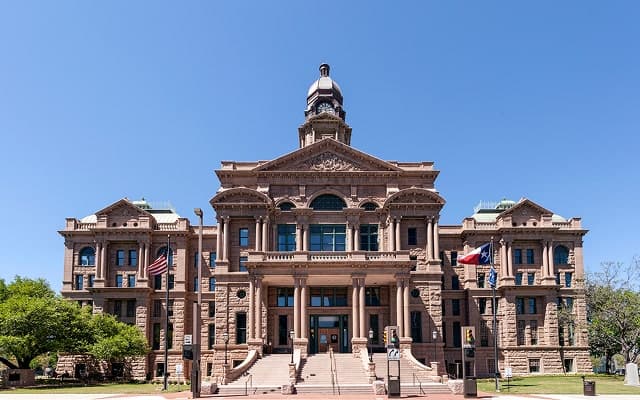
With more than 30 million residents, Texas is America's most populous state. The state court structure is organized into the state's highest appellate, intermediate appellate, and trial courts. The trial courts are further divided into general and special jurisdiction courts and courts of limited jurisdiction.
Texas court records generally include all documents created or generated during a proceeding by a court within the state's judicial system. Texas court records typically begin with a complaint (in a civil case) or an indictment (in a criminal case), and they include the following:
Docket Sheet
This document names the attorney, plaintiff, defendant, and judge in a case. It also lists the many documents referenced in the trial and a summary of each.
Judgment and Orders
This document contains the court decision on the matter and clarifies relevant issues concerning the case, such as who won, applicable punishments, and orders.
Transcripts
This includes any detailed recording of what was said and who said it during a proceeding. These records are created by an electronic recording device or a real-time transcriber.
Evidence
Any evidence submitted to a case is filed for court records. This applies to physical and electronic evidence from either side.
Court Minutes
This document summarised a timeline of court events, including the beginning and the end of the trial, special actions, and minute orders.
Pleadings
Pleadings are formal documents lawyers draft for the trial. They state each party's complaints, defense, admissions, or other stance related to the case.
Types of Court Cases
Texas courts handle two main types of cases: civil and criminal.
Civil Cases
Generally, civil cases are cases that involve disputes between two or more parties (usually persons or businesses) and which are not criminal in nature, such as suits to collect debts or divorce.
Civil cases usually involve private parties where one party (the plaintiff) brings suits against another (the defendant) and asks the court to enforce a private right or to require the defendant to pay for some single wrong done to the plaintiff. After hearing from both sides, the court makes a decision known as a civil judgment. Possible outcomes include paying fines, stopping certain activities, or fixing the issues that caused the dispute.
Criminal Cases
A criminal case involves a legal suit between the state or the people and a defendant. In Texas, a criminal case starts when someone is charged with violating a law, called a criminal or penal statute, and the government, through a prosecuting attorney, files a complaint against the accused person, called the defendant. The prosecuting attorney must prove that the defendant is guilty beyond a reasonable doubt.
Serious crimes, known as felonies, include offenses like murder and robbery. If someone is found guilty of a felony, they may face several years in state prison. In the case of the most serious felonies, called capital offenses, the defendant may receive the death penalty. Less serious offenses are called misdemeanors. These include actions like disorderly conduct or driving without a license. If someone is found guilty of a misdemeanor, they may have to pay a fine, serve up to one year in jail, or face both penalties.
What Are the Different Courts in Texas
Texas has two high courts, one for civil and one for criminal cases, along with intermediate courts of appeals and a large network of district, county, justice, and municipal trial courts, supported by about $1.23 billion in judiciary appropriations for the 2026–27 biennium.
| Court Level | Court Name | Jurisdiction | Key Functions |
|---|---|---|---|
| Appellate | Supreme Court of Texas | Statewide civil and juvenile appeals; nine justices | Court of last resort for civil and juvenile matters; adopts rules of civil procedure and administers the court system. |
| Appellate | Court of Criminal Appeals | Statewide criminal appeals; nine judges | Court of last resort for criminal cases and automatically reviews all death sentences. |
| Appellate | Courts of Appeals (14 courts) | Appeals from district and county courts within each region | Intermediate courts that review civil and criminal judgments of the trial courts. |
| General Jurisdiction | District Courts | Felonies, divorce, civil cases, land title, and juvenile matters | Hold felony and major civil trials, decide family law cases, and handle juvenile and election disputes. |
| Limited Jurisdiction | County Courts (Constitutional and Statutory County Courts at Law) | Class A and B misdemeanors, probate, and civil disputes of limited dollar amounts | Try misdemeanor cases, handle probate and guardianship matters, and decide mid-range civil claims. |
| Limited Jurisdiction | Statutory Probate Courts | Probate, guardianship, and mental health matters in larger counties | Administer estates and guardianships and decide related disputes in the counties that have them. |
| Limited Jurisdiction | Justice Courts | Class C misdemeanors, evictions, and civil claims up to $20,000 | Resolve small claims, debt claims, evictions, and traffic tickets, and serve as magistrates. |
| Limited Jurisdiction | Municipal Courts | Fine-only misdemeanors and city ordinance violations | Handle traffic and parking tickets, city ordinance cases, and magistrate duties within city limits. |
How Many Federal Courts Are in Texas?

There are four different federal district courts within the state of Texas and they include:
- United States District Court for the Northern District of Texas
- United States District Court for the Eastern District of Texas
- United States District Court for the Western District of Texas
- United States District Court for the Southern District of Texas
Most federal district court judges in the state are Republicans. There are 28 Republican judges and 17 Democratic judges in the four federal district courts. These courts have limited power and can only hear certain cases. The U.S. Constitution sets these limits to control the federal government's authority. Federal courts can hear cases that involve federal questions or parties from different states or countries.
How Many Court Cases Are Filed Each Year in Texas?
Texas trial courts received more than 7.9 million new filings in state fiscal year 2024, about half of them traffic and parking cases, and disposed of roughly 103% as many cases as were filed. Felony cases reached a record high, while the clearance rate for felonies was 98%.
| Case Type | Annual Filings | % of Total | Common Offense/Subtype | Clearance Rate |
|---|---|---|---|---|
| Traffic | ~4,100,000 | ~51.9% | Traffic and parking violations filed in municipal and justice courts | ~103% |
| Criminal | ~1,180,000 | ~14.9% | Non-traffic misdemeanors (about 893,000) and felonies (about 290,000) | ~101% |
| Civil | ~960,000 | ~12.2% | Evictions, debt claims, contract, and injury or property cases | ~102% |
| Small Claims | ~70,000 | ~0.9% | Justice court claims up to $20,000 | ~100% |
| Domestic Relations | ~250,000 | ~3.2% | Divorce, child custody and support, and paternity | ~100% |
| Juvenile | ~30,000 | ~0.4% | Juvenile delinquency and child protection | ~100% |
| Other | ~1,310,000 | ~16.6% | Probate and mental health, municipal ordinance violations, and other filings | ~102% |
| Total | ~7,900,000 | 100% | — | 103% |
How Do I Look Up Court Cases In Texas?

Court records in Texas are maintained by the respective courts where the cases were heard. If the case is appealed, the documents are found through the Texas Court of Appeals or the State Supreme Court.
Texas does not have a single database where you can search all court records for the state. Each court is responsible for keeping their own records. Some courts make their records available online, but you may have to contact the court clerk to get access and pay a service fee. For example, cases from the Texas Supreme Court, Court of Criminal Appeals, and courts of appeals are searchable through the Texas Appeals Management and eFiling System (TAMES) Case Search.
For court records that are not available online, interested persons can submit requests via the counter at most courthouses. Records are retained locally at these courts and an available clerk can offer the necessary forms. Note that transcripts have a special request process since they are not prepared alongside other court documents.
People living too far from the specific courthouse where the case was held may contact the Clerk of the court via telephone to find alternative means to access court records.
Federal Court records are also available via theFederal court case locator. Alternatively, interested persons may contact the appropriate court clerk's office via telephone.
Number of Active Judges — State & Federal
Texas has an estimated 2,800 state judges across its appellate and trial courts, plus 48 active federal district judges in four districts.
| Court | Jurisdiction | Active Judges | Selection Method |
|---|---|---|---|
| Supreme Court | Statewide civil appellate | 9 | Elected statewide in partisan elections to 6-year terms |
| Court of Criminal Appeals | Statewide criminal appellate | 9 | Elected statewide in partisan elections to 6-year terms |
| Courts of Appeals | Intermediate appellate (14 courts) | 80 | Elected in partisan elections within each appellate district to 6-year terms |
| District Courts | General jurisdiction trial courts | ~477 | Elected in partisan elections to 4-year terms |
| County-Level Courts | Constitutional county, statutory county, and probate courts | ~526 | Elected in partisan elections to 4-year terms |
| Justice Courts | Class C misdemeanors, evictions, and small claims | ~802 | Elected in partisan elections to 4-year terms |
| Municipal Courts | Fine-only misdemeanors and city ordinances | ~928 | Appointed by city councils or elected, depending on the city |
| U.S. District Court, Eastern District of Texas | Federal trial court | 8 | Nominated by the President and confirmed by the U.S. Senate |
| U.S. District Court, Northern District of Texas | Federal trial court | 10 | Nominated by the President and confirmed by the U.S. Senate |
| U.S. District Court, Southern District of Texas | Federal trial court | 18 | Nominated by the President and confirmed by the U.S. Senate |
| U.S. District Court, Western District of Texas | Federal trial court | 12 | Nominated by the President and confirmed by the U.S. Senate |
| Total Active Judges | — | ~2,879 | — |
What Court Records Are Not Available to the Public in Texas?
While most case files and court records are considered public, some records may be sealed or open only to the parties involved. This typically includes family cases, cases involving minors, mental health records, and adoption records.
Documents may also be redacted for privacy or made confidential for other reasons. The standard process to request the sealing of court records is in Rule 76a of the Texas Rules of Civil Procedure, but other laws may apply.
Some records may also be sealed and exempt from public disclosure through orders of nondisclosure.
Average Case Processing Time & Clearance Rates
Processing time in Texas varies widely by case type and court level: traffic tickets and small claims are resolved in weeks to a few months, while felony and civil district court cases take much longer. The figures below are statewide estimates.
| Case Type | Court Level | Average Processing Time | Description | Clearance Rate |
|---|---|---|---|---|
| Traffic & Parking | Limited Jurisdiction | ~30–60 days | Most tickets are resolved by paying the fine, completing defensive driving, or entering a plea; contested tickets receive a bench or jury trial. | ~103% |
| Small Claims | Limited Jurisdiction | ~1–3 months | Justice court small claims for amounts up to $20,000 are tried to the judge within weeks after the defendant answers. | ~100% |
| Misdemeanor Criminal | Limited Jurisdiction | ~4–8 months | Begin with an initial appearance and arraignment in county or justice court and end in a plea, dismissal, or trial. | ~101% |
| Civil Cases | General Jurisdiction | ~12–18 months | Move through pleadings, discovery, and dispositive motions in district court, and most settle before trial. | ~102% |
| Domestic Relations | General Jurisdiction | ~4–8 months | Divorces require a 60-day waiting period; uncontested cases finish by agreement while contested custody and property cases take longer. | ~100% |
| Felony Criminal | General Jurisdiction | ~6–12 months | Follow indictment by a grand jury with arraignment, pretrial hearings, plea negotiations, and trial or sentencing. | 98% |